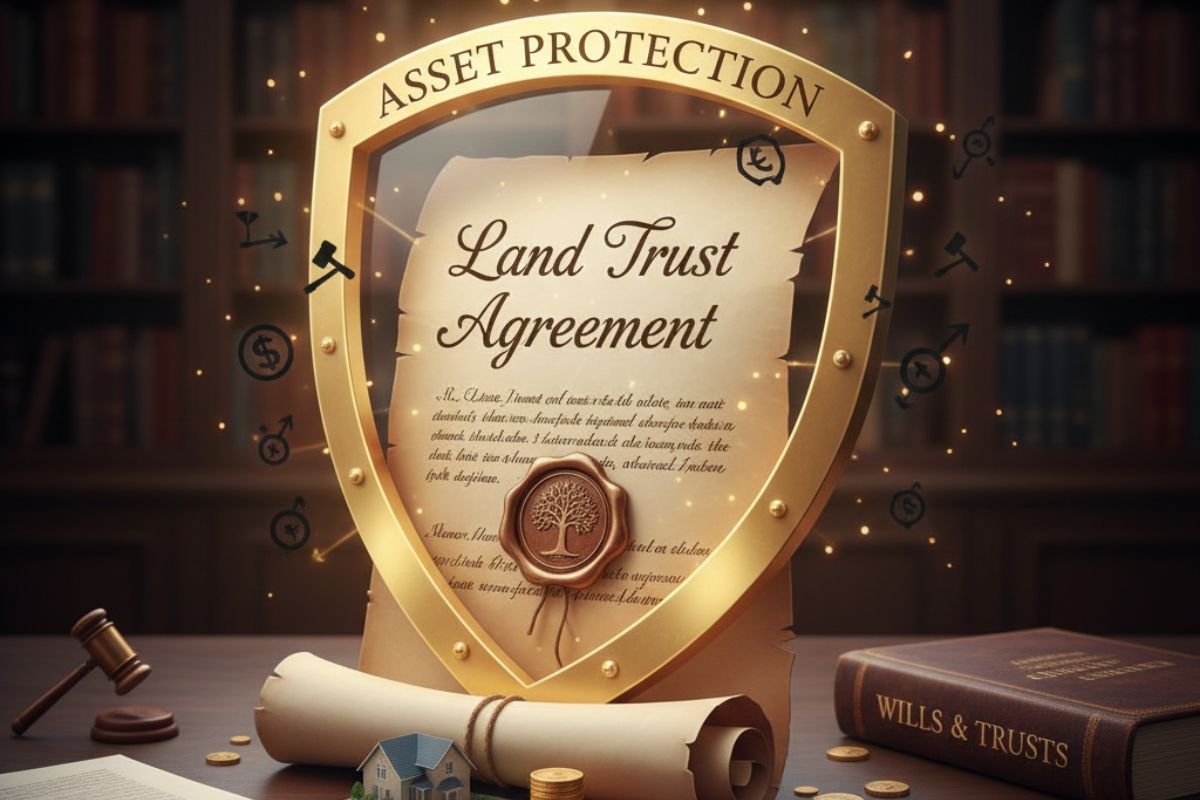
Picture this: you own a vacation home or rental property that you wish to give to your kids without any problems. A land trust can help you do that. A land trust is a legal agreement in which a trustee holds the title to real estate for the person who really owns it (the beneficiary).
This arrangement allows you to preserve control of the property—it’s up to you what happens to it—without having your name on public records. In a normal land trust, the trustor (you) gives the deed to a trustee (who could be an attorney or a corporate trustee), and you stay the beneficiary. Even though the trustee’s name is on the deed, the beneficiary gets all the benefits of ownership, such as collecting rent or selling the home.
In brief, a land trust protects your privacy and makes it easier to plan your estate. It makes it easier to transfer the property onto heirs later on and adds a layer of privacy (since public records show the trustee’s name, not yours). Land trusts help owners avoid expensive public probate proceedings and keep creditors and lawsuits from getting too much attention. Let’s talk about how this works, who it helps, and when you might want to use one.
How Does a Land Trust Work?
There are three people involved in a land trust: the grantor (who sets up the trust), the trustee, and the beneficiary. As the grantor, you give the trust the title to your property. The trustee has legal ownership, but you (the beneficiary) have “equitable title,” which means you have the same rights as an owner. You can tell the trustee to rent out, sell, or take care of the property just like you would if it were in your own name. For instance, when a tenant pays rent, the trustee collects it for the trust, and the money eventually goes to the beneficiary.
Most land trusts are living trusts that can be changed. This means that while you’re still alive, you can change your mind. You can cancel the trust, modify the beneficiaries, or even change the trustees without too much trouble. The most important thing is that the trust agreement clearly states all the provisions, such as who the beneficiaries are (maybe your kids), what powers the trustee has, and when and how the property can be sold or inherited. The trust will hold the title forever once you put money into it (by putting the title of the property into it). The trust still owns the property after you die, and your specified beneficiaries can take control without a judge’s help.
In practice, setting up a land trust usually looks like this:
- Identify Property and Goals: You decide which real estate goes into the trust (e.g., a family cabin or apartment building) and why (privacy, ease of transfer, etc.).
- Choose a Trustee: Often, an attorney or a title-holding company becomes the trustee. This person/entity will legally hold the deed.
- Draft the Trust Agreement: A lawyer writes the trust paperwork, detailing your instructions and the beneficiary’s rights.
- Transfer the Title: You sign a deed transferring your property into the trust. This deed lists the trust as the owner (trustee as record owner), but the terms make clear you control it.
- Manage the Property: The beneficiary (you) directs the trustee. For instance, if it’s a rental home, the trustee collects rent, but you decide who to rent to or when to renovate.
- Change or Terminate (if desired): As long as you’re alive, you can revoke or change the trust’s terms because it’s revocable.
- Pass to Heirs: When you pass away, the trust doesn’t die. Your heirs, as new beneficiaries, simply have the trustee transfer title to them according to your instructions, without court probate.
This arrangement sounds complex, but at heart it’s just a smart way to hold property for your own benefit (and your heirs) while keeping control in your hands.
Key Benefits of a Land Trust
Land trusts aren’t for everyone, but they come with some real perks. Here are the main advantages:
- Privacy (Anonymity): One of the best things about this is that your name isn’t on public records. The name of the trustee, on the other hand, is the owner. This makes it hard for nosy neighbors or those who might want to sue you to find out who owns the property. A land trust stops people from seeing your real estate holdings if you don’t want them to. This is especially useful if you own more than one property or don’t want to showcase your properties. When people see who owns the land, it also helps keep unwanted sales offers from coming in.
- Ease of Transfer & Probate Avoidance: Because a trust maintains the title, it is easier to transfer interests and avoid probate. You don’t need a new deed to give part of your share to someone else; you only change the beneficiary interest. It’s even easier to pass on property to heirs. The trust already has your kids’ names in it. If you die, they take over, and the trustee can give the property back to them without having to go to court to prove your will. This will save your family time, money, and stress.
- Control: The trustee is the deed holder, but you, as the beneficiary, still have all the power. You have the power to decide how the property is used. You just tell the trustee to sell, lease, or mortgage it if you ever want to. This implies that you get the benefits—income, appreciation, and use—just like if it were in your own name.
- Asset Protection: Land trusts can help protect your assets, even though they aren’t foolproof. Holding the title in the name of the trust makes it harder for anyone to see who owns it. It may be harder for creditors or anyone who is suing to find the real owner. In a lot of circumstances, “land trusts make it harder for property owners to get to their assets,” which makes it harder to seize them. For instance, if you are sued personally, a property that is held in a trust might not be an obvious target. That’s so, there are restrictions. Courts in some states can still “pierce the veil” of a property trust, and trustees or owners may still be held responsible.
- Centralized Management: It’s easier to manage several properties if you keep them in one or more trusts. There can be more than one parcel in each trust. This makes it easier to keep track of and manage records. You don’t have to worry about a lot of deeds in your name; instead, you manage your holdings through the trust structure. This can make bookkeeping and organizing your portfolio easier.
- Estate Tax & Other Potential Benefits: Some people utilize land trusts to deal with estate or transfer taxes, but the laws are different for each case. Also, if you ever change your mind, the revocable trust makes it easy to adjust the terms.
These benefits make land trusts very helpful for busy property owners and real estate investors. Forbes says that title-holding land trusts, which are prevalent in Illinois, let owners stay nameless and in power, making them great for estate plans or keeping development projects secret. Some well-known smart buyers, like Walt Disney, established land trusts to buy large areas of land without the sellers knowing.
Who Needs a Land Trust? (When to Use a Land Trust)
You don’t need to be a billionaire to benefit. Here are situations where a land trust might be the right move:
- Estate Planning: A land trust is an excellent way to make sure that your property goes straight to your heirs (kids, relatives, or even charities) without going through probate. It “keeps real estate assets out of probate,” which makes it easy for heirs to take over. This is useful if you have a lot of heirs or a family scenario that is hard to understand. A lot of estate planners say that land trusts should be used with wills or living trusts for property.
- Privacy Concerns: You can own vacation properties, rented homes, or undeveloped land, and want to keep your name off the title. People can check public records, so real estate sites or your neighbors could find your home. Your name is kept secret by a land trust. This is why many famous people and others with a lot of money utilize trusts. People who aren’t famous might want to dodge offers they didn’t ask for or just stay out of the spotlight.
- Real Estate Investors and Developers: People who buy more than one property, like someone who flips houses or builds a portfolio, generally utilize trusts for each deal. This keeps things private and can stop price gouging. (The example of Walt Disney shows how vendors would raise prices if they knew a large player was behind the bid.) Developers working on big projects might put fresh plots in different trusts so they don’t have to share plans with the public.
- Landlords and Business Owners: A trust can keep your personal money separate from the money you make from renting out houses or running a business on land. This makes keeping track of money easier. In reality, it is a good idea for an LLC to possess the trust’s beneficiary interest. You could set up an LLC to own the property and then make that LLC the trust’s beneficiary. This way, the LLC protects you from responsibility, and the trust keeps your information private.
- Multiple Owners or Partnerships: A land trust can hold property for a group or a partnership with more than one owner. It makes it easier to move shares. Partners can easily trade their beneficiary holdings instead of getting new deeds.
- Generational Asset Protection: A lot of families establish land trusts to keep their “family home” or ranch safe. You can name all of your children (and even your grandchildren) as equal beneficiaries. The trust keeps the property for future generations. If necessary, the kids can acquire each other’s shares without changing the trust structure. This keeps the real estate in the family.
- Land Conservation and Public Benefit: Not every land trust is for private use. Holding mineral easements allows conservation land trusts, which are usually nonprofits, to safeguard parks, forests, or historic areas. These are specific kinds of “land trusts” that are meant to keep land safe for the public interest. If you wish to give up development rights to protect the environment, that’s a separate form of land trust that often comes with tax breaks.
In short, a land trust is a good way to manage real estate without anyone knowing about it and in a flexible way. It is especially helpful when privacy, easy inheritance, or protecting assets are the most important things. Illinois has rules that clearly recognize land trusts, but many other states allow them even if they aren’t called that, as they are essentially a type of living trust. That means you can usually make one in Texas, California, or New York (but verify the requirements in your state or talk to a lawyer).
Potential Drawbacks
Land trusts have some downsides to consider:
- Cost and Complexity: Setting up a trust requires hiring a lawyer and filling out paperwork. You will have to engage a specialist to write out the trust agreement. If you hire an outside trustee, like a corporate trustee, they may charge you yearly fees to maintain the trust. Because of these legal and administrative expenditures, land trusts are only worthwhile if you own a lot of property.
- Lender and Title Issues: Some banks and lenders don’t know what land trusts are. You need to tell your lender (and typically gain their permission) if you have a mortgage and want to put the house in a trust. It could be harder to refinance a home that is kept in a trust. If the property isn’t in your name, you can also lose some tax breaks, such as the homestead exemption.
- Limited Liability Protection: A land trust only offers limited liability benefits, unlike an LLC, which protects personal assets. As was said, the trust itself doesn’t immediately get rid of your responsibility. Courts might still hold you responsible for debts or responsibilities as a landlord. Some investors think that a land trust is just as safe as an LLC, but it’s not the same. That’s why it’s often a good idea to combine a land trust with an LLC, as was said above.
- Potential Loss of Rights: Some rights that come with ownership can be altered. Some governments, like California, let homeowners put off paying property taxes by giving them special rights, such as Proposition 13 protections or a homestead exemption. When the title is in a trust, those rights may be lost or made more complicated.
- Administration: You need to stay on top of your paperwork. You have to keep the trust’s records up to date because it exists. You might have to file financial returns for the trust every year. People who will benefit need to know. It’s more work to manage than owning property altogether.
- Rigidity vs. Flexibility: Revocable trusts are flexible, while irrevocable land trusts (if employed) are not easy to amend. And if a trust can’t be broken, you don’t really own the property anymore; the trust does. So choose the right kind.
Many individuals still think the benefits are worth the costs, especially if you care about privacy and a seamless inheritance. Just make sure to talk to an estate or real estate lawyer about how to make the trust work for you.
How to Create a Land Trust (Step-by-Step)
- Consult an Attorney: Look for a real estate or estate planning lawyer who knows about land trusts. They’ll tell you if a land trust is right for you and how to set it up legally.
- Choose Your Trustee: Choose who will own the property legally. It could be a close friend, a lawyer, or a business trustee, such as a title company. (If privacy is important, individuals usually choose an entity or professional over a family member, so the nominee’s name is kept secret.)
- Draft the Trust Agreement: The lawyer writes a document that spells out the terms, such as who the beneficiaries are (you can name people, businesses, or even another trust), what powers the trustee has, how revenue will be shared, and how property will be handled or sold.
- Sign and Execute: You and the trustee sign the agreement once you are comfortable with it. There is now a trust on paper.
- Transfer the Deed: The most important thing to do is put your property in the trust. You sign a new deed, usually a trust deed or land trust deed, that names the trustee as the owner. The local land records have a copy of this deed.
- Fund the Trust (if needed): If the trust will hold any mortgage or loan notes, you should also move those. Make sure that taxes and insurance are taken care of correctly. The trustee (or you) pays them, but the trust should own the records.
- Review & Adjust: Check the trust from time to time. You can change the list of beneficiaries if you add or delete family members. If things change, such as a divorce or a sale, make sure to update the trust.
- Communicate with Heirs: Let your heirs know that there is a trust and what to do, even though it is private. When you die, they will need to call the trustee to help with the transfer.
Usually, each stage needs legal help. If you do it well, you’ll have made a tool that is flexible: you still own the property, but it is kept in a way that works for your estate plan.
Take the Next Step with 23 Legal
Land trusts can be a good method to retain your privacy, make inheritance easier, and keep control of your property, but they need to be set up correctly. If you own a home in Chicago or Illinois and are thinking about a land trust, estate planning, or how to keep your property safe for a long time, having a lawyer in your area who really listens is very important.
That’s where Ben Weaver at 23 Legal comes in. Ben can help you with trust questions, planning for your family’s future, or real estate problems with your home or business. He does this without adding to your stress. Call (847) 447-6004 to talk about your choices and build a plan that works for you.
FAQs
A land trust is mainly used for privacy and estate planning. It holds property title under a trustee’s name while letting the real owner (beneficiary) manage it. You’d use a land trust to keep your ownership private, simplify passing property to heirs, and potentially shield assets from liability. Think of it as a way to “hide in plain sight” – the property is yours, but you’re off the record.
Inheritance becomes smoother. Since the trust holds the title, the heirs named as beneficiaries can receive ownership interest without needing probate court approval. For example, instead of waiting months for a will’s probate, your children would have their names added as beneficiaries and simply have the trustee transfer title to them as you directed. This avoids probate delays and keeps the transfer private.
Almost any real estate can be placed in a land trust – residential homes, commercial buildings, farmland, even undeveloped land. Some people even put multiple parcels into one trust. If the land can legally be transferred, it can go into a trust. (Remember, you just change the deed to list the trust.)
As mentioned, having a land trust can offer some asset protection. By separating your personal identity from the title, it deters lawsuits targeting the property directly. However, it doesn’t guarantee immunity. If you want stronger protection, professionals often suggest pairing a land trust with an LLC or other entity, as in the “land trust + LLC” strategy. The trust hides your name; the LLC shields your personal wealth from business liabilities.
Use a land trust when the main goals are real estate management and privacy. A regular living trust (not just for land) holds all kinds of assets and primarily deals with probate avoidance, but it may not hide your ownership in public records if you own property. An LLC, on its own, protects liability but doesn’t necessarily help with privacy or inheritance. Combining them is powerful: e.g., your LLC could be the beneficiary of a land trust, giving you privacy (from the trust) and liability protection (from the LLC). Ultimately, talk to an attorney: they can map out if a land trust, an LLC, a living trust, or a mix is right for you.
Land trusts are not primarily tax tools. They won’t reduce property taxes or estate taxes by themselves in most cases. However, if you use a conservation land trust (donating development rights), there can be income tax deductions. But for a standard title-holding land trust, expect normal taxes: you (as beneficiary) still pay income tax on rental income and property taxes as usual. Always check state laws; some local benefits (like certain homestead exemptions) might not apply when the title is in a trust.
Why Choose 23 Legal
23 Legal offers Real Estate and Estate Planning legal services to individuals, families, community associations and small business owners throughout Chicagoland. We know how intimidating “the law” can be. In fact, when most people think of law offices, they think of stuffy leather chairs, huge wooden desks and pompous lawyers who charge outrageous fees. That’s not us! We believe in 1-to-1; the same lawyer should work with you all the way through. Whether you have an estate planning issue, family trust concern, or you have a legal problem in regard to a new home, business, real estate or remodel, you need a lawyer who cares. That’s where Ben comes in! We are great listeners; more than that, we are lawyers who believe that our clients always come first.